
How Long Do HVAC Systems Last? When to Repair or Replace

Your average HVAC system should last 10–20 years, depending on its type, your usage, and how well you maintain it. However, you may need to replace yours sooner than average.
Timing is everything when it comes to your HVAC system. If you swap it out too soon, you could miss out on a few more years of solid performance. If you swap it out too late, your outdated model could deliver lackluster performance and higher-than-average bills.
How long do HVAC systems last, and is it worth holding onto yours a little longer? At Hamilton Plumbing, Heating, A/C & Rooter, we want homeowners to get the most out of their systems. Our guide will break down HVAC longevity by system type and maintenance frequency, then discuss whether you should repair or replace.
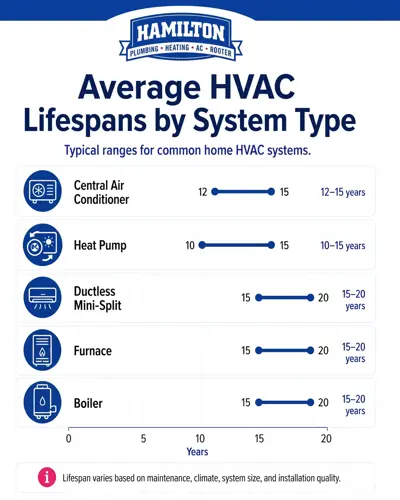
Average Lifespans by System Type
While the average life expectancy of an HVAC system is over 10 years, that number can change depending on the system type. Read on to see which description fits your system best.
Central Air Conditioner
A central air conditioner lasts 12–15 years, though you may want to consider a replacement a little before that point. Performance may gradually decline with age, especially if maintenance is inconsistent. The result is higher energy bills and more frequent breakdowns.
Heat Pumps
The lifespan of a heat pump varies quite a bit, with most heat pumps lasting between 10 and 15 years. However, a ductless mini-split heat pump may last longer with regular maintenance.
Ductless Mini-Split Systems
These systems have longer lifespans of around 15–20 years. Since their core feature is providing custom heating and cooling for each room, they tend to experience less wear and tear than central models.
Furnaces
We recommend replacing your gas or oil furnace after 15–20 years. That said, electric furnaces sometimes last a little longer since they don’t burn fuel, avoiding a lot of the corrosion that gas and oil models experience.
Boilers
Boilers have similar lifespans to oil and gas furnaces, usually reaching 15–20 years before needing a replacement. However, you may want to replace yours earlier to keep up with the latest energy-efficient models.
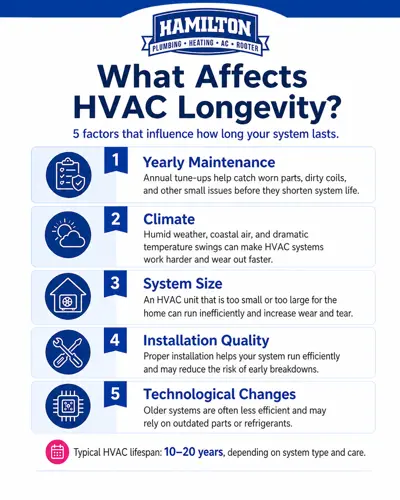
What Affects HVAC System Longevity?
Just as going to the dentist keeps your teeth in top shape, maintaining your HVAC system keeps it running efficiently for longer. Skipping yearly maintenance increases the chance that something will go wrong with your system.
How long do HVAC systems last, and what can you do to help yours have a long life? Consider these factors.
Yearly Maintenance
Maintenance catches small problems early, so you’re less likely to get a nasty surprise during a heat wave or cold snap. Technicians look for issues like dirty coils, low refrigerant, or worn-out parts that could cause future breakdowns or malfunctions.
Climate
Humid, subtropical climates and coastal regions are harsher on HVAC systems than drier and temperate areas. Wetter air tends to cause corrosion like rust, making your system work harder and wearing it out faster.
Dramatic temperature swings also mean you’re more likely to use your system frequently and run it for longer periods.
System Size
The wrong-sized system for your home will affect performance, cost, or both. An HVAC unit that’s too small can take a long time to heat or cool. On the other hand, one that’s unnecessarily large can short cycle, waste energy, and wear out components more quickly.
Installation Quality
When looking at how long HVAC systems last, getting the job done right the first time is an often-overlooked detail. An HVAC that isn’t installed properly is more likely to break down prematurely, leaving you with yet another repair job or replacement.
Technological Changes
Outdated models are more likely to have problems, such as lower SEER ratings (which measure how efficiently your unit uses energy throughout the year) and the need for more frequent repairs. Manufacturing companies are constantly improving their HVAC models to adjust temperatures more efficiently and keep your energy bills lower.
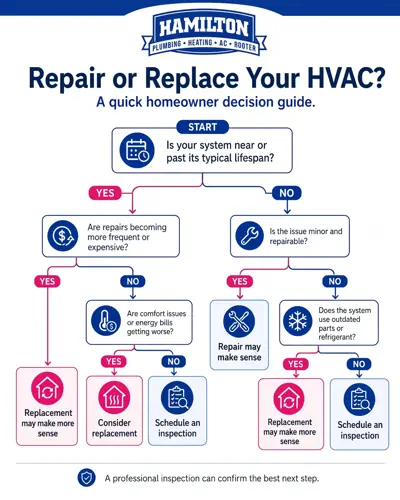
5 Signs Your HVAC System May Need Replacement
Is a new HVAC system worth it? If you don’t want to worry about a sudden breakdown in the middle of summer, the answer is yes. Check for these signs that you should go ahead and get a new model:
Your unit’s age is approaching (or exceeding) its average lifespan.
You have gradually increasing energy bills despite no changes in lifestyle or energy use.
Your unit heats or cools unevenly or suffers from poor performance (like short cycling).
You notice noises or odors, such as rattling or musty smells.
Your model uses outdated or discontinued parts (such as R-22 refrigerant).
How much does it cost to fix an HVAC system? Yearly maintenance inspections or a new installation may be more affordable in the long-term than calling for frequent repair jobs. If you want to start figuring out your budget, call us for a free quote.
If you still want to do more research, check out our blog where we explore HVAC replacement factors like pricing, system age, and sizing.
When Is the Best Time to Replace Your HVAC System?
The best time to replace your HVAC is spring or fall. Not only can you get a major installation out of the way before summer or winter, but you’ll likely have more scheduling flexibility.
Off-seasons tend to be slower for home service businesses, making it easier to fit an inspection into your schedule.
Hamilton Plumbing, Heating, A/C, & Rooter offers heating installations and air conditioning replacements year-round.
How to Extend the Life of Your HVAC System
You might be asking, “Should I fix my own HVAC?” There are a few DIY tasks homeowners can do regularly, such as replacing air filters and checking thermostat settings. For anything more complex, however, it’s best to rely on a professional technician.
Scheduling an appointment with a technician can help extend your unit’s lifespan with tune-ups or tasks like:
Cleaning dirty coils, fans, and ductwork
Changing old filters to reduce strain on your system
Installing a smart thermostat to help you control your energy usage
When to Schedule HVAC Replacement
When does it make sense to replace your HVAC system? If you notice any of the warning signs we’ve talked about, reaching out to a technician is your next step. You’ll get a professional eye on your unit and learn whether you should repair or replace it.
How long do HVAC systems last, and should you get a second opinion? If you need help finding a balance between performance and savings, give us a call. One of our technicians will come out to inspect your HVAC and help you choose between a repair and a replacement.
